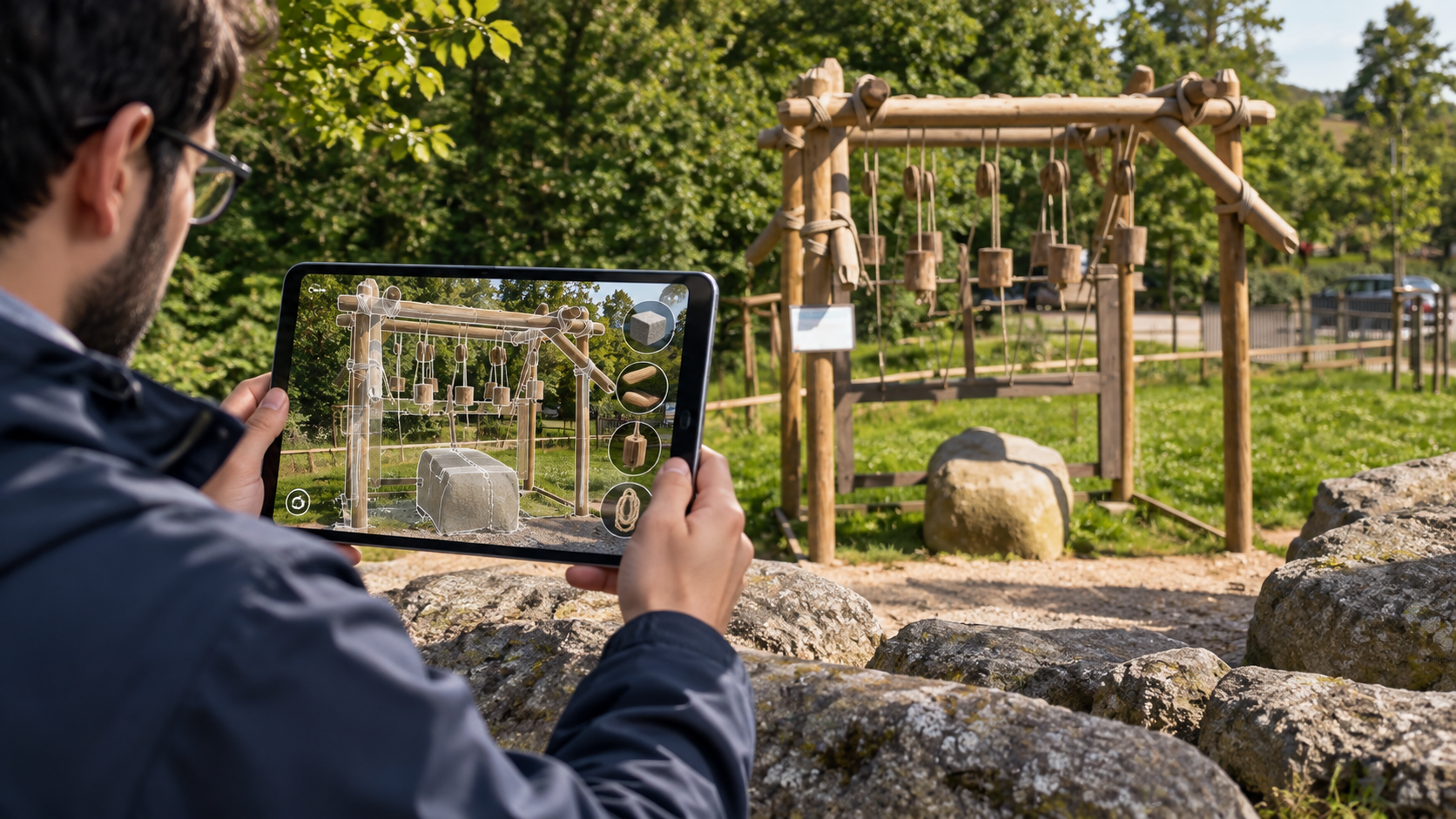
AR reconstruction experience at the Roman stone saw
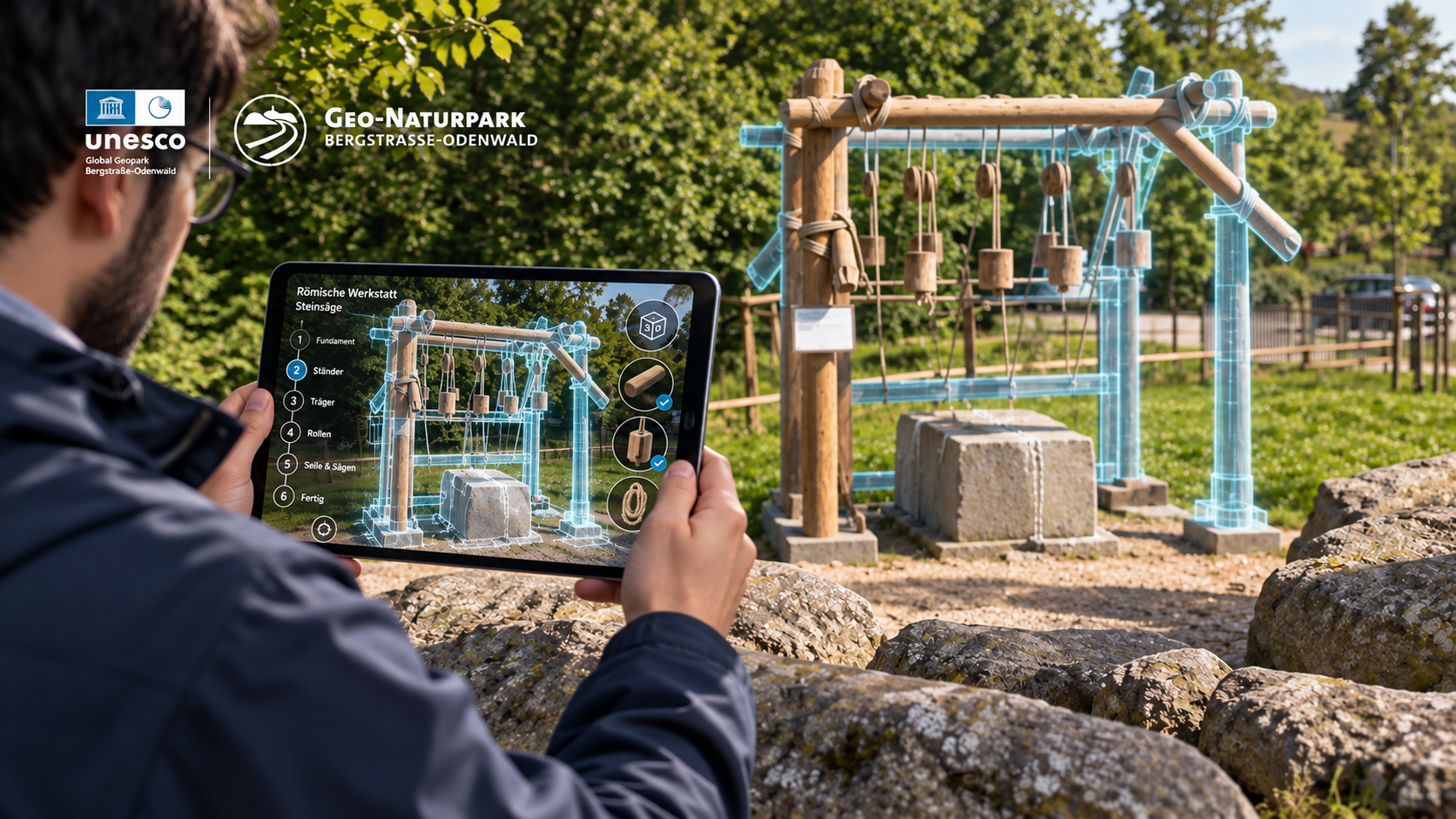
A mobile AR learning experience created for Geo-Naturpark Bergstraße-Odenwald. Visitors scan the site, gather materials, assemble a holographic reconstruction of the Roman pendulum saw, and gradually materialize the full machine step by step.
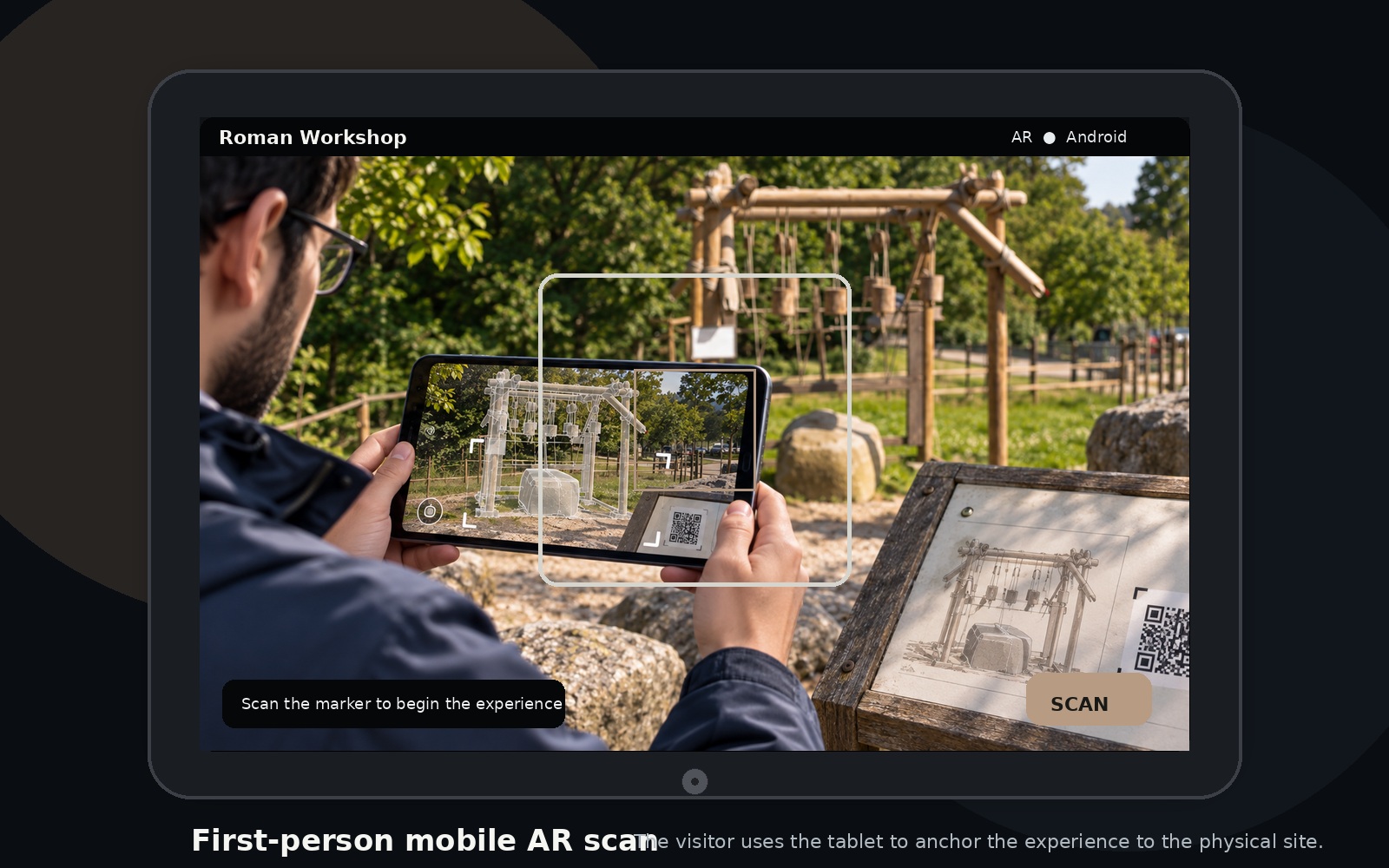
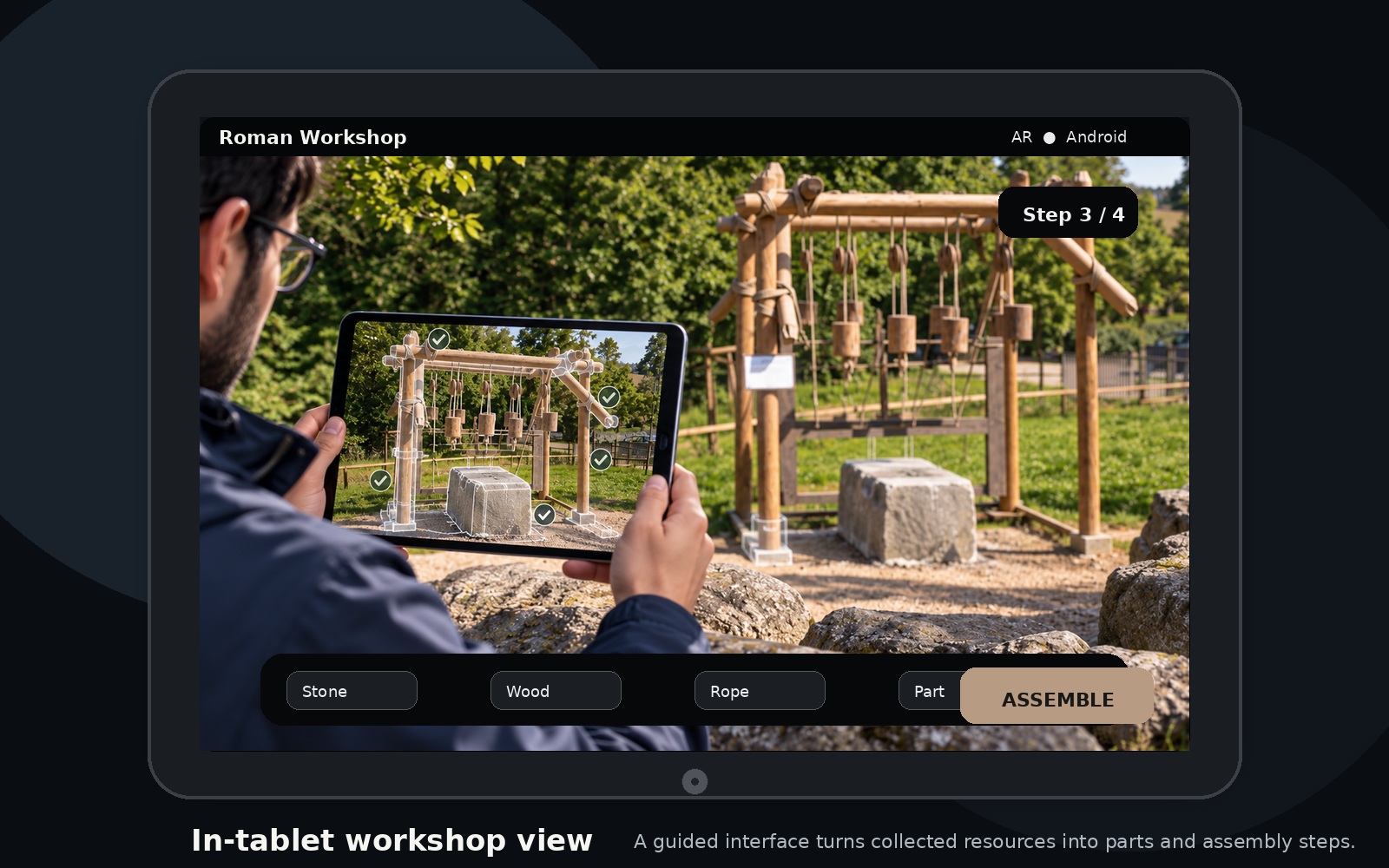

Roman Workshop was designed as an on-site AR experience that turns historical explanation into a clear interaction loop. Instead of only reading about the Roman pendulum saw, visitors scan the location, collect materials, assemble the mechanism with a transparent holographic guide, and finish with a clearer, materialized reconstruction of the full machine.
A cultural-heritage context tied to one of the UNESCO Global Geoparks.
The project connects the digital reconstruction directly to the real site and its historical artifact.
Explain how the Roman pendulum saw worked through interaction rather than passive viewing.
I worked on the Unity-based AR implementation, image-tracking flow and the spatial setup that anchors the experience to the physical site.
I contributed to the core user flow: gathering resources, preparing the workshop logic, and supporting the step-by-step assembly of the holographic saw guide.
The experience was iterated through Android testing, with improvements focused on clarity, outdoor usability, object placement and visitor readability.
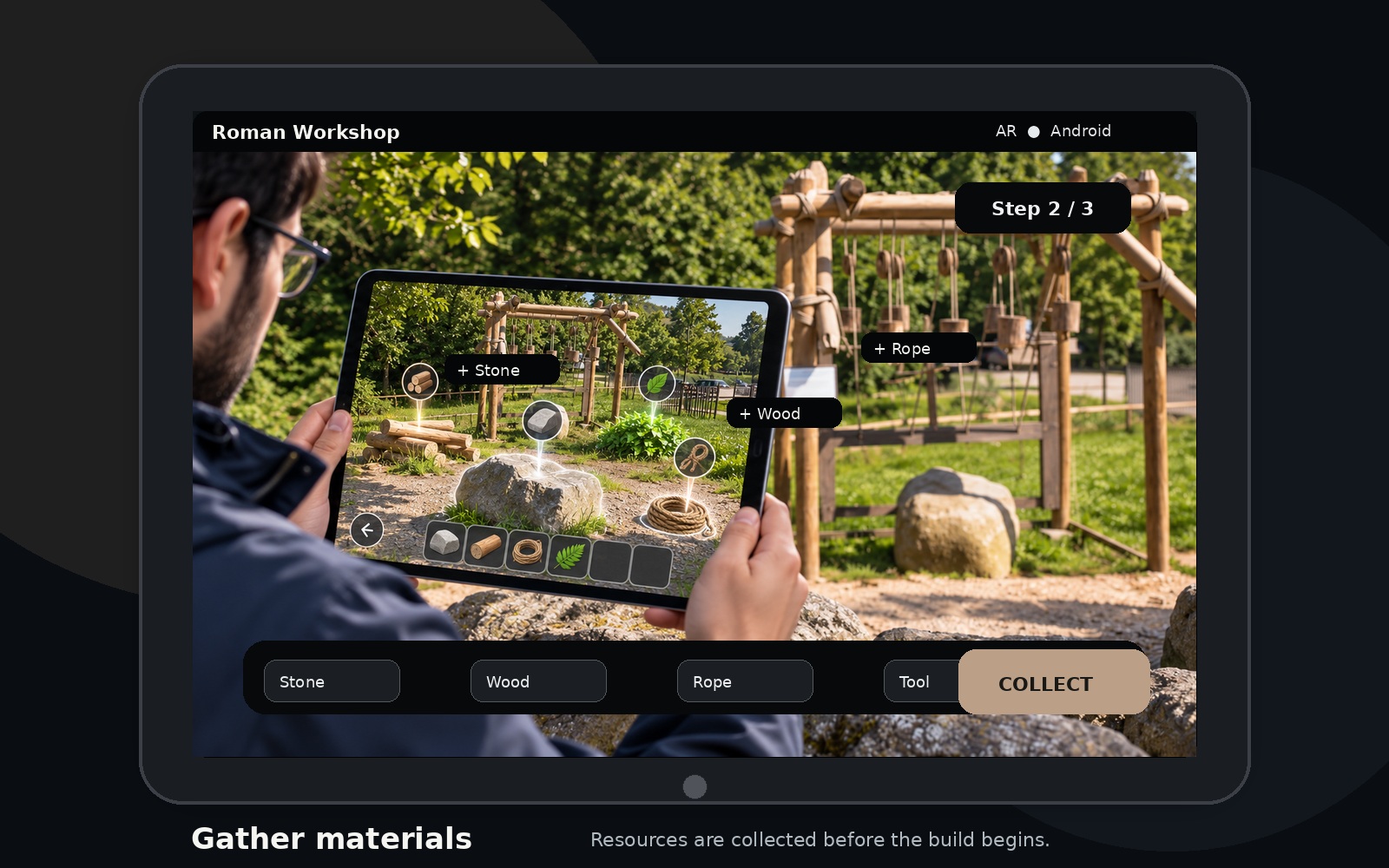
The experience begins with a simple preparation step in which visitors gather the materials needed for the build.
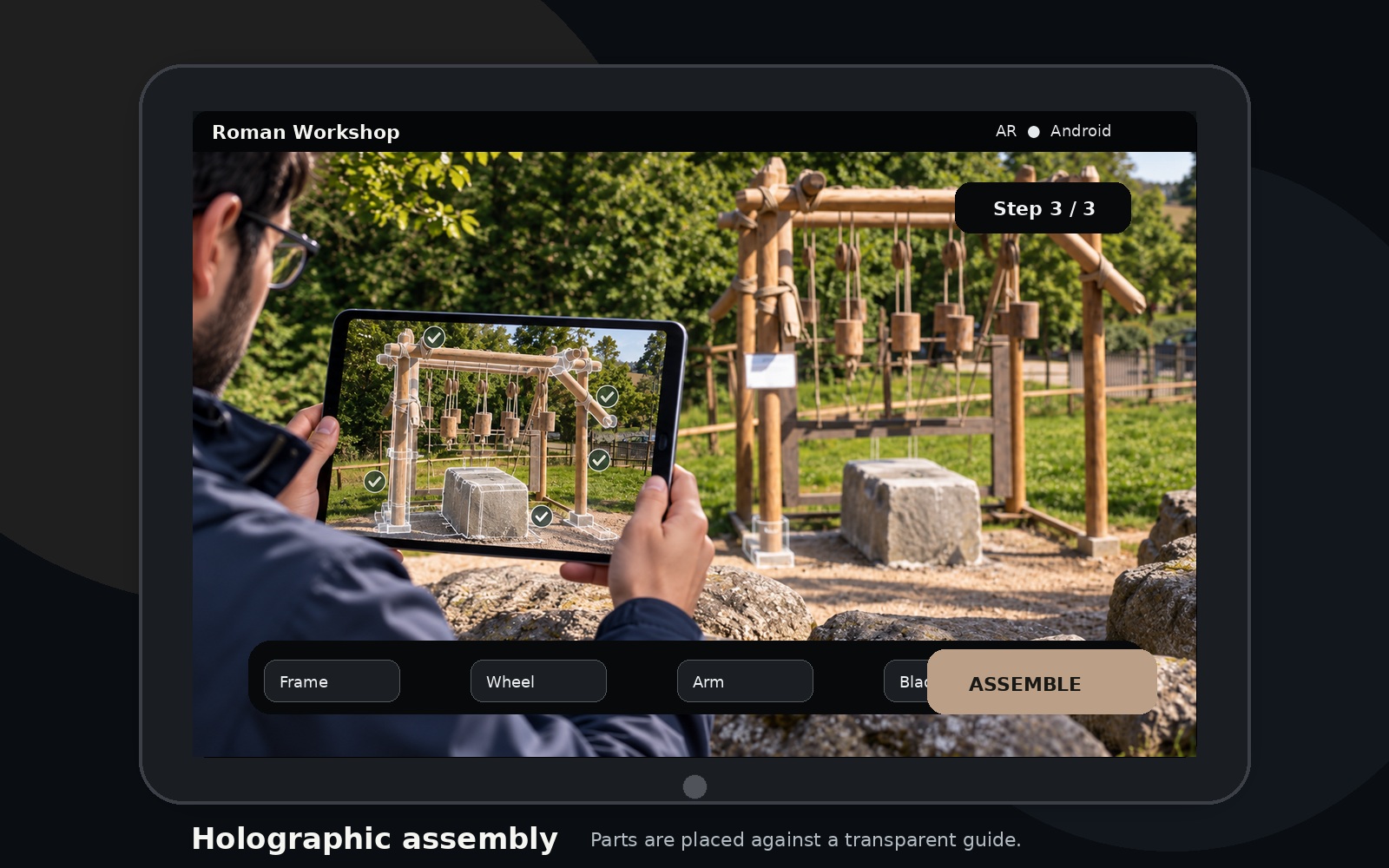
A transparent reconstruction helps the visitor understand how the parts fit together before the machine becomes complete.
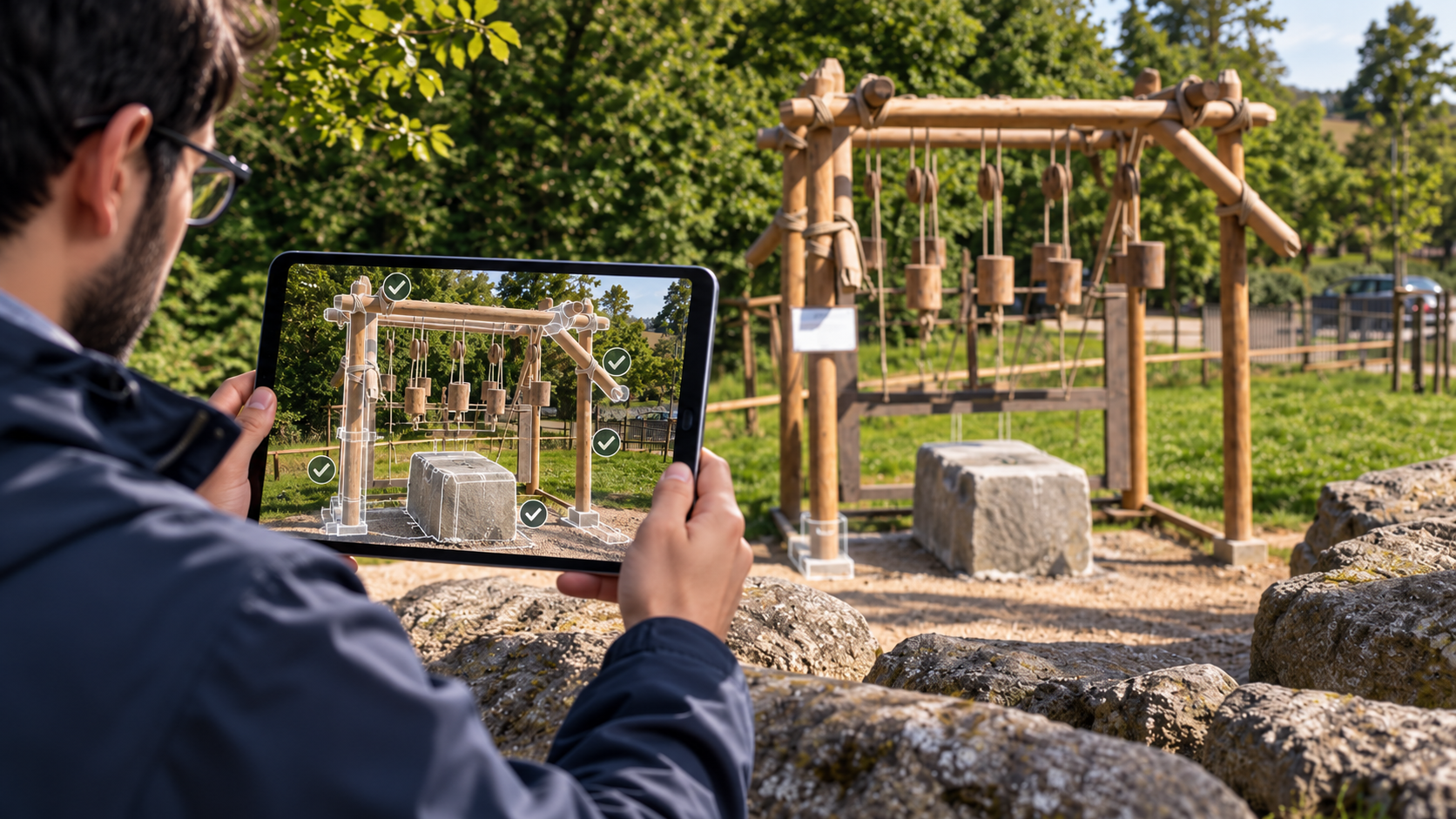
The last step turns the guided build into a more complete Roman pendulum saw, linking the interaction back to the historical artifact.
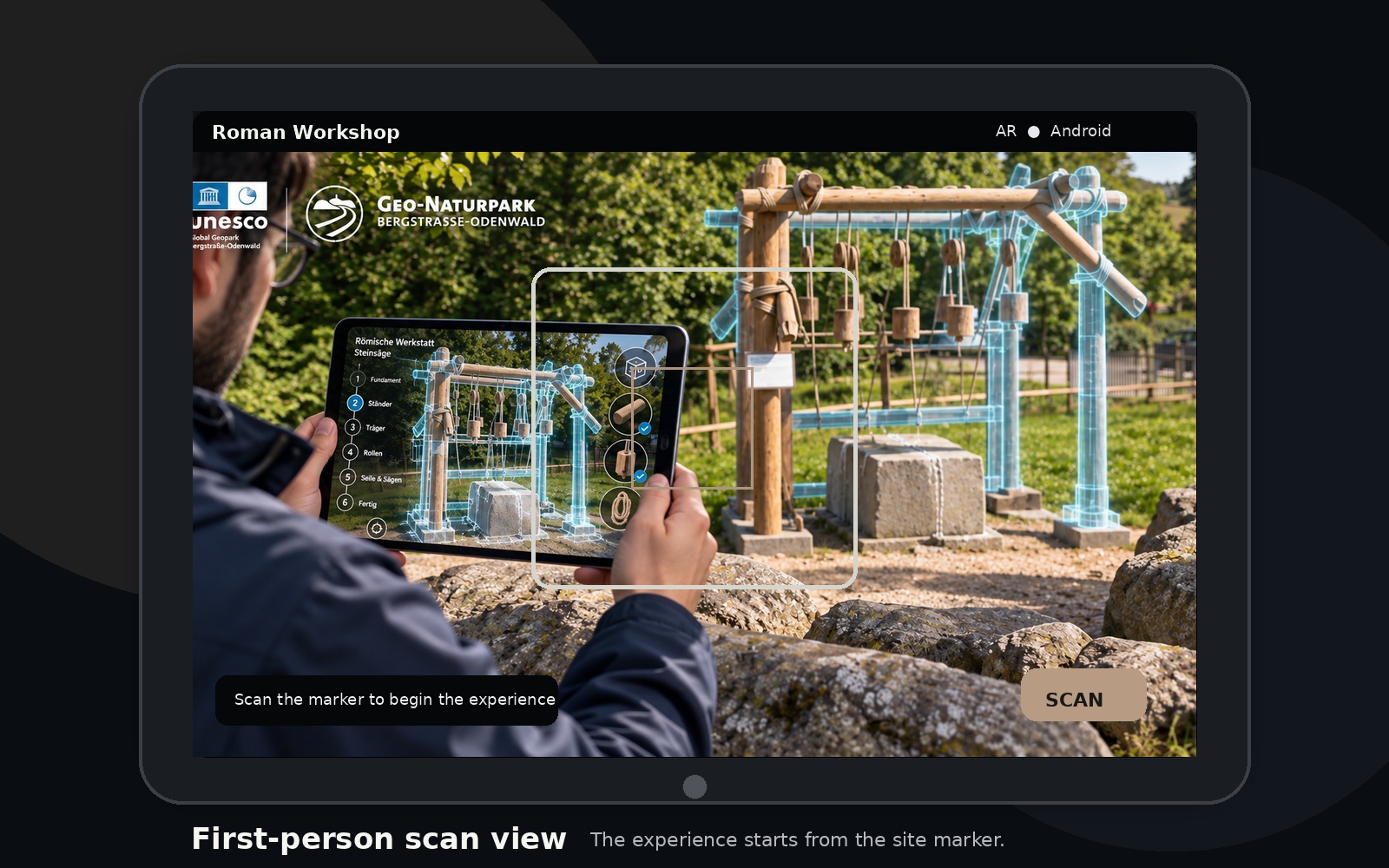
The interaction model stays intentionally simple: scan the site, gather materials, follow the holographic guide and complete the reconstruction. This keeps the experience accessible for tourists, students and first-time AR users.
The combination of real-location context and guided digital reconstruction helps the Roman saw feel meaningful rather than detached from the place.
The prototype was developed in Unity 6 with AR Foundation image tracking. Because it is intended for on-site use, tracking stability, re-acquisition, scale clarity and mobile performance were treated as primary constraints from the beginning.
This technical focus directly shaped the UX: the transparent guide supports comprehension, while the step-by-step assembly keeps the task understandable on a handheld device.
Roman Workshop was developed as a collaborative university project. This page focuses on my contribution while presenting the overall project outcome in a concise portfolio format.